
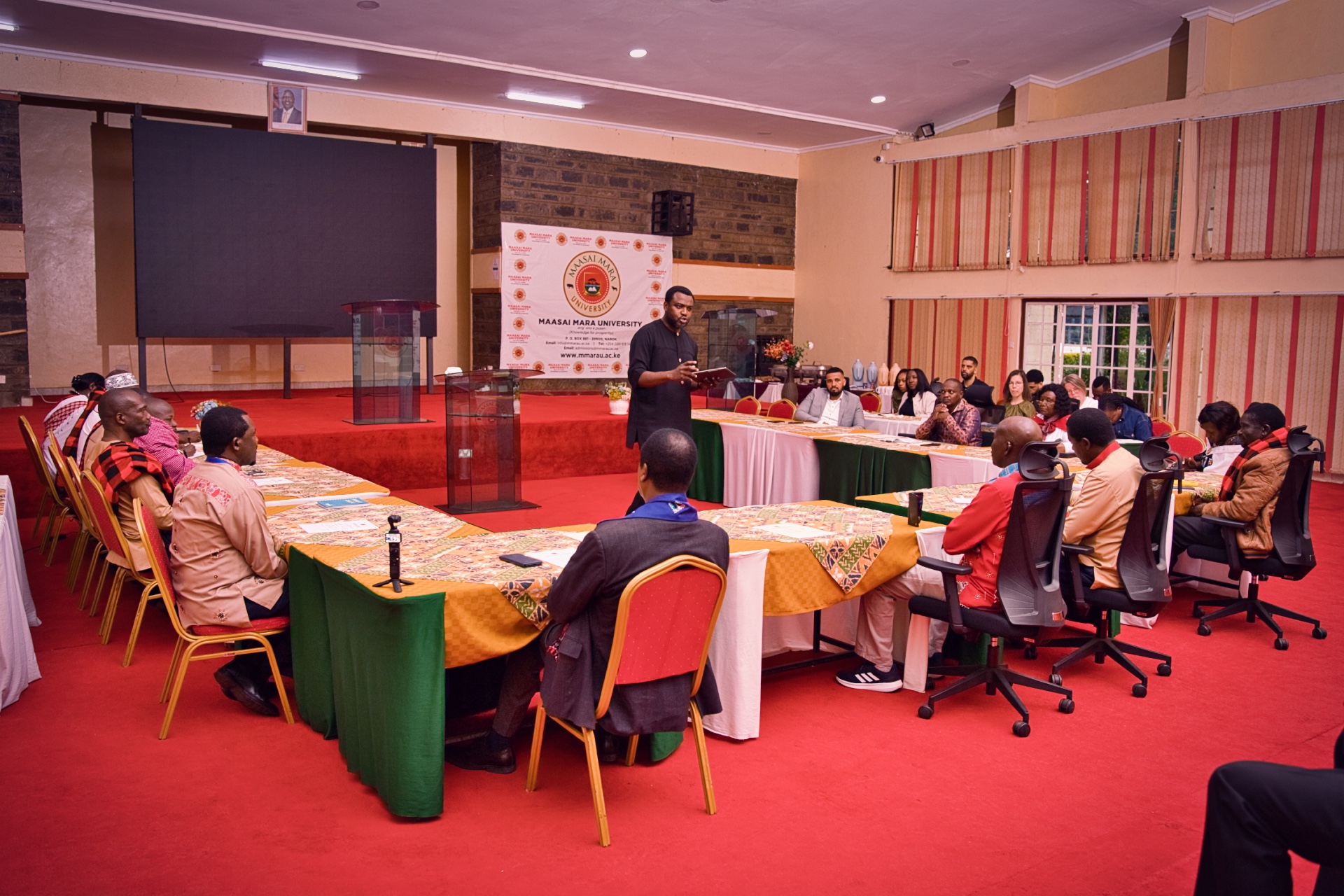
In a university boardroom in Kenya, a conversation unfolded that is now quietly challenging how institutions think about leadership, talent, and global relevance.
At Maasai Mara University, senior leaders gathered expecting a routine engagement. What they encountered instead was a strategic framework rooted in scripture, tested by global institutions, and delivered with unusual clarity. It did not remain in the room. It is already finding its way into conversations among vice chancellors, governors, policymakers, and spiritual leaders across regions.

Addressing the Vice Chancellor, Prof. Peninah Aloo Obudho, alongside the governing board, deans, and directors, the session was framed with a simple but disarming assertion. Many institutions are not limited by what they lack. They are limited by how intentionally they organize what they already carry.
What followed was not a speech in the conventional sense. It was a reframing of leadership itself, built around five scriptural anchors that, taken together, form a blueprint for transforming any system, whether academic, governmental, corporate, or ministerial.
The engagement began with an ancient scene that still shapes modern leadership thinking. In Daniel 1:3–4, a king searched across a nation and selected a few young men “gifted in all wisdom, possessing knowledge and quick to understand.” Among them was Daniel. There is no standalone book written about Nebuchadnezzar, yet his name has endured across centuries because it is preserved in the Book of Daniel. A ruler of an empire is remembered through the life of a man who was identified, elevated, and given access. The implication is as practical as it is profound. The top talents a leader recognizes and intentionally supports will determine the visibility of the institution, attract sustained collaboration, and ultimately shape how that institution is remembered. In that sense, the question is no longer whether exceptional people exist within a system. It is whether leadership has the discernment and courage to identify and position them.
The top talents a leader recognizes and intentionally supports will determine the visibility of the institution, attract sustained collaboration, and ultimately shape how that institution is remembered
The focus then shifted to another moment, quieter but equally instructive. In Luke 2:46–47, Jesus at the age of twelve is found in the temple, sitting among teachers, listening and asking questions, astonishing those present with His understanding. Before any public ministry, before any visible power, there was a posture of inquiry. Leadership, in this light, begins not with answers but with diagnosis. The question posed to the room was precise:
If a strong idea emerges today, how long does it take before it gets implemented and becomes impactful? Where does it slow down? Where does it lose energy? Where does it die under the weight of process?
These are not abstract questions. At the University of Cambridge, similar bottlenecks led to the creation of Cambridge Enterprise, a system designed to move ideas from research to application by connecting innovators to funding, managing intellectual property, and accelerating execution. At Stanford University, a leadership decision in the 1950s to position top researchers alongside industry created an environment where ideas moved faster, collaboration became natural, and over time that proximity helped give rise to Silicon Valley. The conclusion is difficult to ignore. Ideas are rarely the constraint. Friction is.

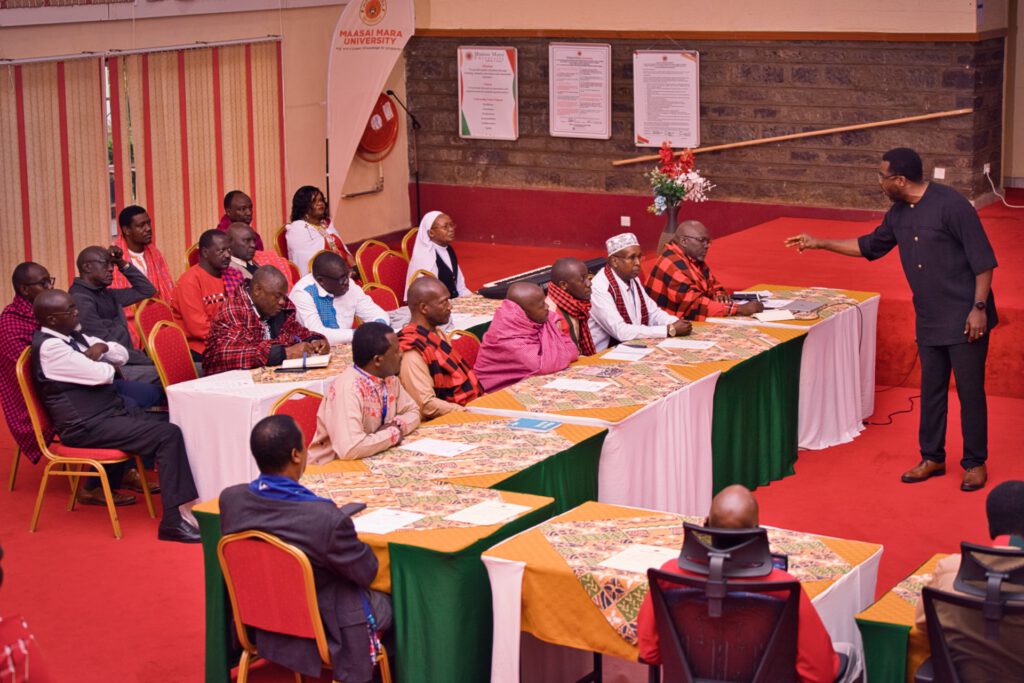
From there, the conversation moved to people as the true carriers of systems. In John 18:19, when Jesus was questioned, the focus was not on structures or institutions. It was on His disciples and His doctrine. In modern terms, this reframes how strength is measured. Institutions can be full of activity, rich in structure, and still remain limited if their strongest individuals are not aligned into a coordinated force. At Harvard University, this realization led to a shift away from funding isolated departments toward funding real-world problems, bringing together economists, scientists, policy experts, and practitioners into unified teams. The result was not only stronger outcomes but access to significant global funding. The distinction is subtle but decisive. Activity can be high while impact remains low. Alignment is what converts effort into influence.
The fourth idea brought the room into a more uncomfortable but necessary reflection. In 2 Kings 4:2–3, a widow, facing crisis, declares she has nothing, only to be asked a question that changes everything. “What do you have in the house.” The instruction that follows is equally instructive. “Borrow vessels… not a few.” Growth, in this sense, begins with recognition and expands through relationships. Many institutions underestimate what they carry. Alumni networks remain unmapped. Partnerships remain symbolic. Research remains unconnected to application. Yet when these assets are identified and mobilized, multiplication begins. At the University of California, Berkeley, a deliberate effort to map and engage alumni transformed a dispersed network into a powerful engine of funding, mentorship, and global influence, contributing to multi-billion-dollar growth. The principle is both simple and demanding. What is not identified cannot be multiplied. What is not expanded cannot scale.
What is not identified cannot be multiplied. What is not expanded cannot scale.
The final point brought clarity into focus. In Matthew 5:14–16, the image is unmistakable. A city set on a hill cannot be hidden. Yet visibility is not accidental. It is the result of clarity. Institutions often do many things, yet remain unknown for anything with authority. Those that define a clear focus begin to attract attention, funding, and partnerships at a different level. Wageningen University & Research made a deliberate choice to focus on agriculture and over time became a global reference point in that field. The implication is direct. The world does not engage institutions simply because they exist. It engages them because it understands what they stand for.
What gave the session its distinctive weight was not only the framework, but the perspective behind it. The session was led by Temitope Agbana, whose work spans academic collaboration, public health innovation, and institutional strategy across Africa and Europe. This cross-sector experience shaped the engagement, bridging spiritual insight with practical execution in a way that resonated across disciplines.
By the time the session concluded, what remained was not simply a set of ideas, but a reframed understanding of leadership itself. The room had shifted from asking what more could be added to asking how what already exists could be aligned, accelerated, and amplified.
And that is perhaps why this moment is beginning to travel. Because it speaks beyond one university. It speaks to any system, in any nation, where capacity is present but not yet fully organized.
The conclusion, though quietly delivered, carried unmistakable weight.
The difference between capacity and impact is not resources. It is leadership that sees clearly, aligns deliberately, and acts with intention. Where that happens, institutions do not merely function. They become reference points
– Dr. Temitope Agbana